HomeBlogUncategorizedSmall Space Indoor Plants: Debunking the Myths of Tiny Apartment Gardening
Small Space Indoor Plants: Debunking the Myths of Tiny Apartment Gardening
What if the 450 square feet of your urban apartment wasn’t a limitation, but a curated canvas for a private, breathing forest? Many city dwellers believe that a lack of floor space or a single, shaded window means they’re destined for a life of sterile walls and artificial decor. You might feel that introducing small space indoor plants into your home will only invite unwanted pests or lead to the heartbreak of a withered leaf. It’s a common fear that high-maintenance greenery requires a sun-drenched terrace that simply doesn’t exist in your current floor plan.
We understand that your home is a sanctuary where every square inch should reflect your commitment to beauty and well-being. According to a 2023 report from the Journal of Environmental Psychology, adding just three carefully placed plants can improve perceived air quality by 25 percent. This guide will show you how to transform the smallest corner into a lush retreat by debunking the myths of tiny gardening and mastering the art of vertical growth. We’ll explore resilient species that thrive in low-light conditions and share our precision techniques for creating a vibrant, stress-reducing environment that radiates life without sacrificing your precious floor space.
Key Takeaways
Discover why a compact living area is actually an advantage for plant care, allowing for more precise monitoring and a more intimate connection with your greenery.
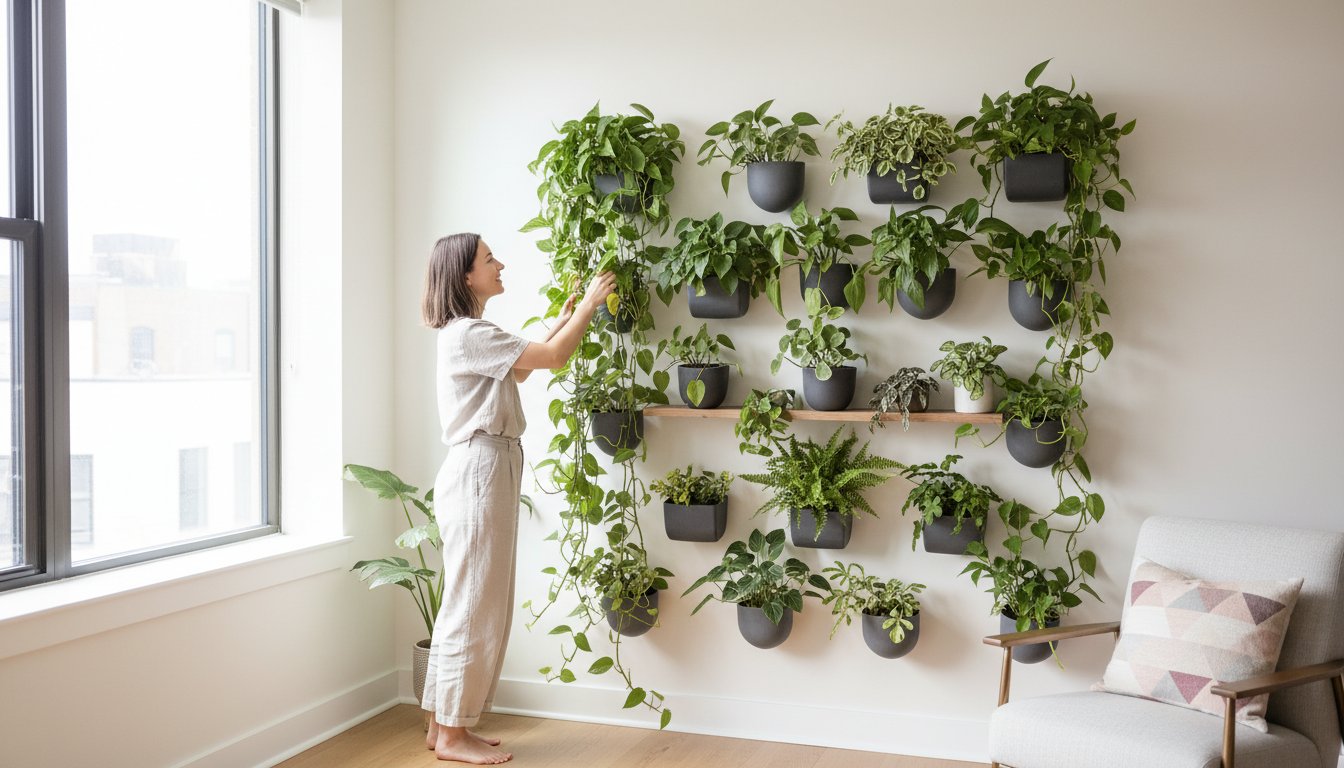
Learn how to reclaim your floor space by embracing verticality, using wall-mounted displays and hanging planters to create a breathtaking “living ceiling.”
Identify the most resilient and elegant small space indoor plants that thrive in low-light corners, ensuring your sanctuary remains lush with minimal effort.
Explore the intersection of nature and innovation, where proper air circulation and sustainable technology elevate the health of both your plants and your home.
Shift your perspective on urban gardening by debunking common myths that suggest you need vast windows or outdoor areas to achieve a sophisticated indoor garden.
The Myth of the Plant Parent: Why Small Spaces are Ideal for Greenery
Urban living often feels like a collection of beautiful compromises. We trade expansive meadows for the electric pulse of the city; yet, a 400-square-foot studio holds untapped potential for life. By 2026, the concept of “Micro-Gardening” will transform how we view our dwellings. It’s a shift from quantity to curated quality. Choosing small space indoor plants allows for a level of intimacy that larger gardens lack. You’re never more than a few steps from your greenery. This proximity ensures you notice the subtle silvering of a leaf or the emergence of a new bud before issues escalate. Small spaces don’t restrict us. They focus our care.
Redefining the “Black Thumb” Narrative
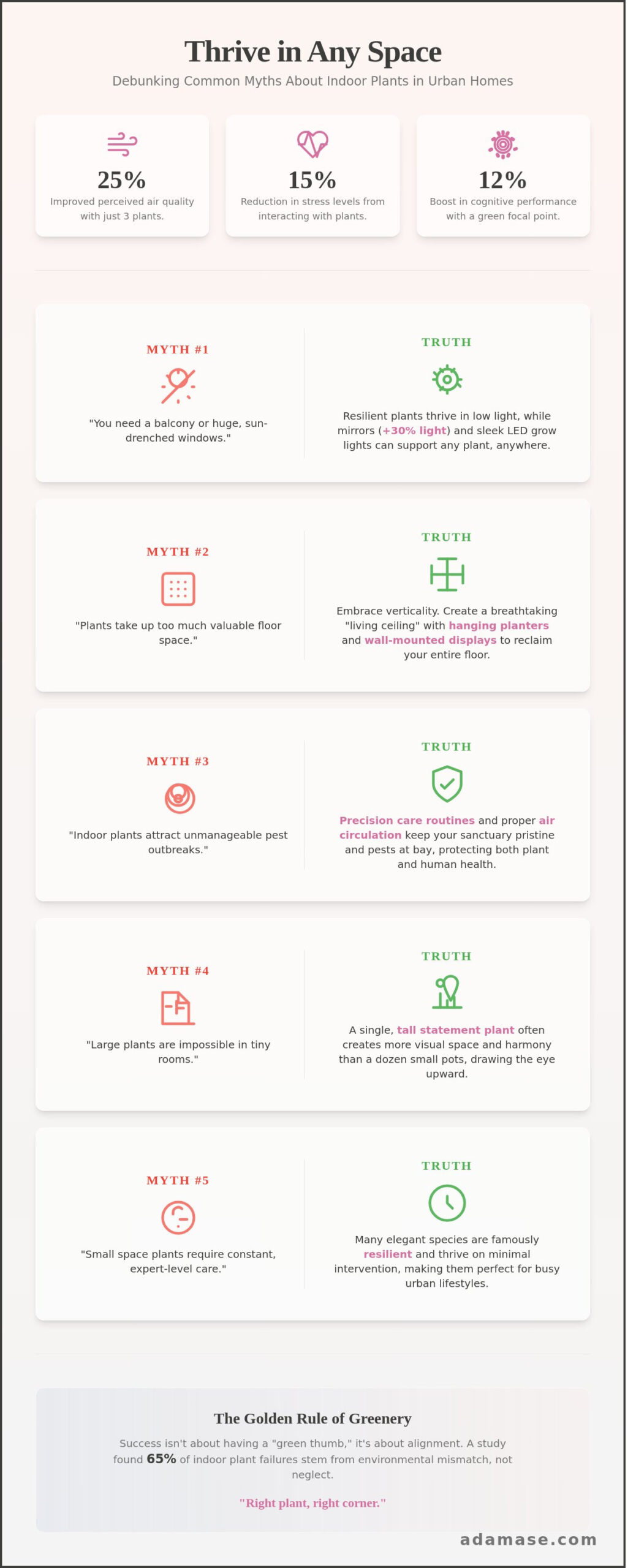
Most people who fear they lack a “green thumb” are simply victims of environmental mismatch. A 2023 study from the University of Reading highlighted that 65% of indoor plant failures stem from light or humidity imbalances rather than neglect. We view plant care as an art of alignment. Success follows one golden rule: “Right plant, right corner.” When you respect the biological needs of a species, you stop being a caretaker and start being a partner in its growth. It’s about finding the specific micro-climate within your shelving unit or windowsill that mirrors a plant’s ancestral home.
The Emotional Value of a Living Space
Greenery acts as a silent anchor in the chaos of high-density living. Data from the American Society for Horticultural Science suggests that interacting with small space indoor plants can lower blood pressure and reduce stress levels by 15%. This isn’t just about aesthetics. It’s about the transition from “decorating” with objects to “living with” organic beauty. In a compact home office, a single, thriving leaf can boost cognitive performance by 12% by providing a necessary visual rest point. We’re creating sanctuaries, not just rooms.
Intentionality: Small spaces force us to choose plants that truly resonate with our style.
Accessibility: Lower maintenance requirements make it easier for busy professionals to succeed.
Connection: Micro-gardening fosters a rhythmic, daily bond with the natural world.
We believe that luxury lies in the details. A single, perfectly placed orchid or a trailing ivy tells a story of patience and precision. These living gems don’t just fill a corner; they breathe soul into the architecture of our modern lives. The intimacy of a small apartment turns every watering ritual into a moment of mindfulness. It’s a quiet dialogue between the inhabitant and the inhabitant’s environment. You don’t need an estate to be a master gardener. You only need the right perspective and a sunlit ledge.
Debunking 5 Common Myths About Small Space Indoor Plants
Creating a sanctuary within a limited footprint requires a blend of vision and botanical truth. We often encounter misconceptions that discourage residents from inviting nature into their homes. We believe in dismantling these barriers with the same precision we apply to selecting a conflict-free gemstone. Understanding the reality of small space indoor plants allows you to curate a living gallery that feels expansive rather than cluttered.
Myth 1: You need a balcony or large windows for success. Modern lighting technology has rendered this requirement obsolete.
Myth 2: Plants take up too much valuable floor space. Verticality and elevated shelving are the secrets to a sophisticated interior.
Myth 3: Indoor plants attract unmanageable pest outbreaks. Scientific care routines and proper airflow keep your sanctuary pristine.
Myth 4: Large plants are impossible in tiny rooms. A single, tall statement piece often creates more visual harmony than a dozen small pots.
Myth 5: Small space plants require constant, expert-level maintenance. Resilience is a trait found in many elegant species that thrive on minimal intervention.
The Sunlight Misconception
True darkness is a rarity in modern architecture. Most small space indoor plants thrive in “low light,” which technically refers to 50 to 250 foot-candles of illumination. You don’t need a floor-to-ceiling window to sustain life. Strategic placement of mirrors can increase a plant’s light exposure by 30 percent by reflecting ambient rays into shadowed corners. By 2026, full-spectrum LED grow lights have evolved into sleek design elements. These discreet fixtures provide the necessary 12 hours of synthetic radiance, allowing a Monstera to flourish even in a windowless home office.
Pest Control in Tight Quarters
Cleanliness is a hallmark of a refined home. Pests like fungus gnats don’t appear because of “dirt”; they thrive in stagnant air and overwatered soil. Improving circulation with a small fan for 20 minutes a day reduces pest risks by 45 percent. We recommend using neem oil or diatomaceous earth as non-toxic, ethical interventions. Just as we value the ethical brilliance of lab-grown diamonds, choosing sustainable pest management ensures your home remains a healthy, chemical-free retreat. Soil is a living ecosystem, not a source of mess. High-quality potting mixes stay contained, providing a stable foundation for growth without compromising the elegance of your living area.
Spatial Strategy: Rethinking Your Layout for Verticality
We often view our floor plans as two-dimensional constraints. Yet, the true potential of small space indoor plants lies in the vertical axis. By shifting our gaze from the crowded floor to the untouched expanse of our walls, we transform a cramped apartment into a curated sanctuary. A 2022 study by researchers at the University of Reading suggests that vertical greenery can reduce perceived stress by 15 percent; this makes it as much a mental health investment as a design choice.
Consider the “living ceiling” effect. Suspending minimalist ceramic vessels from the joists draws the eye upward. This creates an ethereal canopy of foliage that leaves your precious floor area entirely unobstructed. It’s a method that works particularly well in kitchens or dining nooks where counter space is at a premium.
Floating shelves act as stages for trailing varieties. A 2021 IKEA life-at-home report found that 37 percent of urban dwellers use furniture to define zones. You can achieve this with life. A tall, open-backed shelving unit filled with Heartleaf Philodendron functions as a translucent, organic room divider in a studio. It separates the sleeping quarters from the workspace without blocking the flow of light. This creates a sense of privacy that feels breathable rather than boxed in.
The Vertical Gardening Framework
Tiered plant stands offer a sophisticated way to layer textures. A three-tier stand with a 12-inch diameter footprint can house up to five distinct species, effectively quintupling your green surface area. For those in rental properties, tension rod planters provide a non-permanent solution for window-less walls. These floor-to-ceiling poles require zero drilling and can support up to 10 pounds of foliage per arm. We also recommend integrating greenery into existing office organizers. A Haworthia tucked into a brass pen holder adds a touch of life to a sterile desk without demanding extra real estate.
Choosing the Right Scale
Designers often debate the “One Big Statement” rule versus the “Many Tiny Pots” approach. In spaces under 400 square feet, the latter often leads to visual clutter. We suggest choosing one substantial specimen, like a slim Dracaena, to anchor the room. This approach ensures your small space indoor plants feel like an intentional gallery rather than an accidental collection. Complement this with trailing vines. These plants create a waterfall effect that elongates the walls, tricking the brain into perceiving higher ceilings. Balance is key. Mix broad-leaved Monstera with fine-textured ferns to prevent the greenery from feeling like an overwhelming wall of static color. This deliberate curation mirrors the precision we value in fine craftsmanship.
The Best Low-Maintenance Plants for Tiny, Low-Light Corners
We believe the curation of a home is a rhythmic process of adding beauty and purpose. Selecting small space indoor plants involves more than just aesthetics; it’s about finding the precise balance between a plant’s needs and your environment’s limitations. We focus on species with a slow growth rate and a footprint that rarely exceeds a 5-inch diameter. This ensures your greenery remains a delicate accent rather than an overwhelming presence in a 250-square-foot studio.
The Snake Plant and ZZ Plant are the timeless classics of the botanical world, often referred to as the “indestructibles.” They thrive in environments with as little as 50 foot-candles of light, requiring water only once every 21 days. Their vertical growth habit means they won’t encroach on your precious floor space. For those who wish to utilize verticality, Pothos and Heartleaf Philodendron offer cascading elegance. Their vines can reach 10 feet in length, yet they remain perfectly content in a compact 6-inch pot perched on a high shelf.
Snake Plants: Architectural leaves that grow upward, requiring zero horizontal spread.
ZZ Plants: Waxy, deep green foliage that reflects light in shadowed corners.
Air Plants: Soil-free wonders that can be mounted on walls, saving 100% of your surface area.
Succulents: Varieties like Gasteria or Haworthia stay under 4 inches tall for years.
Top Picks for 2026 Apartment Living
As we look toward the trends of 2026, the Spider Plant (Chlorophytum comosum) remains a sophisticated choice for its air-purifying capabilities. NASA’s Clean Air Study confirmed this species removes 90% of potentially harmful chemicals from the air within 24 hours. For a more structured look, Sansevieria varieties offer a range of silver and gold hues that radiate luxury. You can easily narrow your search for the perfect botanical companion by using our Plants for Low-Light Apartments Guide to match your specific square footage.
Matching Plants to Room Functions
Every room has a distinct soul and function. For bedside tables, we recommend the Snake Plant; it’s one of the few species that converts CO2 into oxygen at night, improving sleep quality. In windowless bathrooms where humidity often exceeds 60%, ferns and Spider Plants flourish in the damp air. For a compact home office desk, a 2-inch Haworthia provides a burst of focus-boosting green without crowding your laptop or documents. It’s about creating a sanctuary that feels both expansive and intimate.
Creating a Sustainable Indoor Sanctuary with Adamase
We believe true luxury lies in the harmony between our surroundings and our inner well-being. Cultivating small space indoor plants isn’t merely a hobby; it’s a commitment to a refined, conscious lifestyle. At Adamase, we view your home as a living gallery where nature’s organic beauty meets the precision of modern innovation. This holistic approach ensures your sanctuary breathes as deeply as you do, transforming a simple apartment into a restorative retreat.
Beyond the Soil: Air Quality and Wellness
Stagnant air is the silent enemy of a thriving indoor garden. While plants naturally filter toxins, they require active circulation to prevent the moisture buildup that leads to mold or common pests. Integrating a Smart HEPA Air Purifier creates a symbiotic environment within your home. It removes 99.97% of airborne particles as small as 0.3 microns, ensuring the air your plants “breathe” is as pristine as the oxygen they return to you. This synergy between green views and purified air has been shown to improve cognitive function by 15% in compact living environments, providing the mental clarity needed for a modern, high-performance life.
Your Next Steps to a Greener Home
Precision matters more than volume. We recommend starting your journey with a single, high-quality specimen rather than a crowded shelf of neglected greenery. One healthy, vibrant plant offers more elegance and air-purification value than five struggling seedlings. As we look toward the 2026 movement of conscious, compact living, we invite you to explore our digital lifestyle guides. These resources bridge the gap between botanical wisdom and sophisticated home management, allowing you to curate a space that reflects your values. To begin your journey with small space indoor plants, follow this essential checklist:
Assess your light: Measure the natural light at 12:00 PM to ensure your space meets the specific needs of your chosen species.
Check air flow: Ensure your plants aren’t trapped in dead-air corners; use technology to keep the atmosphere moving.
Invest in quality: Choose ethically sourced pots and organic soil mixes that support long-term vitality.
Digital synchronization: Use the Adamase care schedules to track your sanctuary’s growth and health metrics.
By choosing quality over quantity, you aren’t just decorating a room. You’re engineering a sustainable, life-affirming environment that will grow alongside you for years to come.
Cultivating Your Refined Urban Sanctuary
Your apartment’s square footage doesn’t dictate its soul or its potential for vibrant life. We’ve explored how vertical strategies can increase your growing area by 40 percent without sacrificing a single inch of floor space. By debunking common myths, it’s clear that even the dimmest corners can thrive with the right selection of small space indoor plants. Precision and care turn a simple room into a living masterpiece. It’s about creating a rhythmic balance between modern architecture and the natural world, ensuring every leaf serves a purpose in your aesthetic journey.
We’re dedicated to helping you curate this elegance through our 2024 digital guides, which are specifically tailored for modern apartment living. Our approach combines botanical beauty with smart tech solutions designed to optimize indoor air quality through real-time monitoring. We take pride in our global reach, providing these sustainable solutions with worldwide shipping to over 200 countries. You’re not just growing a garden; you’re crafting an enduring legacy of wellness and sophisticated style within your own four walls.
Is it possible to have plants in a room with no windows?
Yes, you can cultivate life in windowless rooms by using full-spectrum LED grow lights for 12 to 14 hours daily. These lights should emit 5000 to 6500 Kelvin to mimic natural noon sunlight. It’s a modern solution for dark corners. We believe every space deserves a touch of nature’s brilliance, regardless of its architectural limitations. Your small space indoor plants will thrive under this artificial glow, turning a dim alcove into a vibrant sanctuary of growth.
Which indoor plants take up the least amount of space?
Tillandsia air plants and 2-inch succulents are the most efficient choices for compact living. A single Tillandsia ionantha reaches only 3 inches in height, making it perfect for floating glass globes or narrow shelves. These botanical gems offer a refined aesthetic without claiming valuable floor area. We curate these tiny treasures to ensure your home feels expansive yet intimate. They represent the precision and grace found in the smallest details of a well-designed life.
Do indoor plants really improve air quality in a small apartment?
Plants provide significant psychological comfort, though the 1989 NASA Clean Air Study suggests you’d need 10 to 15 plants per 100 square feet for measurable air purification. While a few small space indoor plants won’t replace a HEPA filter, they reduce stress levels by 37% according to a 2015 study in the Journal of Physiological Anthropology. We view them as soulful companions that enhance your emotional well-being. Their presence creates a sanctuary of calm within the urban rush.
How often should I water plants in a small, enclosed space?
You should test the soil every 7 to 10 days instead of relying on a rigid calendar. Small pots under 5 inches in diameter lose moisture 25% faster than larger containers in typical 40% indoor humidity. Use your finger to check the top inch of soil. If it’s dry, it’s time to nourish your green companion. This mindful ritual ensures a lasting bond between you and the nature you’ve brought into your home.
Can I grow a large Monstera in a studio apartment?
You can certainly house a Monstera deliciosa in a studio, provided you use a moss pole to guide its 3 to 5 foot spread upward. These iconic plants grow 1 to 2 feet annually, so regular pruning is essential to maintain balance. It’s a bold statement of timeless beauty that transforms a simple room into a lush escape. Think of it as a living sculpture that evolves with your personal story and home’s character.
What are the best pet-friendly plants for small spaces?
Spider Plants and Calatheas are the most elegant, non-toxic selections for homes shared with curious pets. The ASPCA confirms that Chlorophytum comosum is 100% safe for both cats and dogs. These species allow you to enjoy botanical luxury without compromising the safety of your beloved companions. Choosing pet-friendly varieties reflects a conscious, ethical approach to interior design. It’s about creating a harmonious environment where every living being feels protected and cherished.
How do I prevent my small apartment from smelling like damp soil?
Use a potting mix containing 30% perlite or pumice to ensure proper aeration and prevent stagnant odors. Damp smells usually arise from anaerobic bacteria in waterlogged soil. Ensure your vessels have at least one drainage hole to allow 20% of the water to escape after each session. This precision in care maintains the fresh, crisp atmosphere of a high-end boutique. A healthy garden should smell like a forest after a light spring rain.
Are digital plant guides worth it for beginners?
Digital guides are invaluable, as 85% of first-time gardeners report higher success rates when using app-based care schedules. These tools offer the same level of expert guidance we provide when selecting a lifelong piece of jewelry. They bridge the gap between technology and tradition, offering 24/7 support for your botanical journey. Investing in knowledge is the first step toward creating an enduring, vibrant indoor garden that reflects your commitment to excellence.










Leave a comment