HomeBlogUncategorizedEasy Indoor Greenery: The 2026 Guide to Effortless Living Decor
Easy Indoor Greenery: The 2026 Guide to Effortless Living Decor
Last November, Sarah looked at the brittle, brown remains of her fourth “indestructible” fern and realized that finding easy indoor greenery felt more like a chore than a joy. Like 68% of urban dwellers who struggle with limited natural light, she felt the weight of past failures and the exhaustion of deciphering contradictory care instructions. We believe your home should be a sanctuary of timeless beauty, not a source of stress.
You likely agree that a living space only feels truly alive when it’s infused with the quiet radiance of nature. This 2026 guide promises to transform your perspective by introducing high impact plants that demand little but offer an eternal sense of calm. We’ve curated a selection of resilient species that flourish in the shadows of modern apartments, ensuring your decor remains as sophisticated as it is effortless.
We’ll walk you through the five most durable low light species and a precise three minute weekly routine that guarantees success. By the end of this journey, you’ll possess the expert confidence to maintain a lush, breathing environment that reflects your commitment to a refined and conscious lifestyle.
Key Takeaways
Shift your perspective from maintenance to mindfulness, embracing greenery as a vital component of a tranquil, soul-nourishing home sanctuary.
Unlock the science behind the “Neglect Threshold” to choose species that resonate perfectly with your environment’s natural light and rhythm.
Explore our 2026 Hall of Fame to select easy indoor greenery that balances effortless care with the timeless elegance of a lush interior.
Apply professional design principles and the “Rule of Three” to style your plants as intentional, high-end decor elements that define your living space.
Utilize our refined digital checklists and low-light guides to cultivate your garden with the same precision and grace as a master artisan.
The Philosophy of Easy Indoor Greenery in 2026
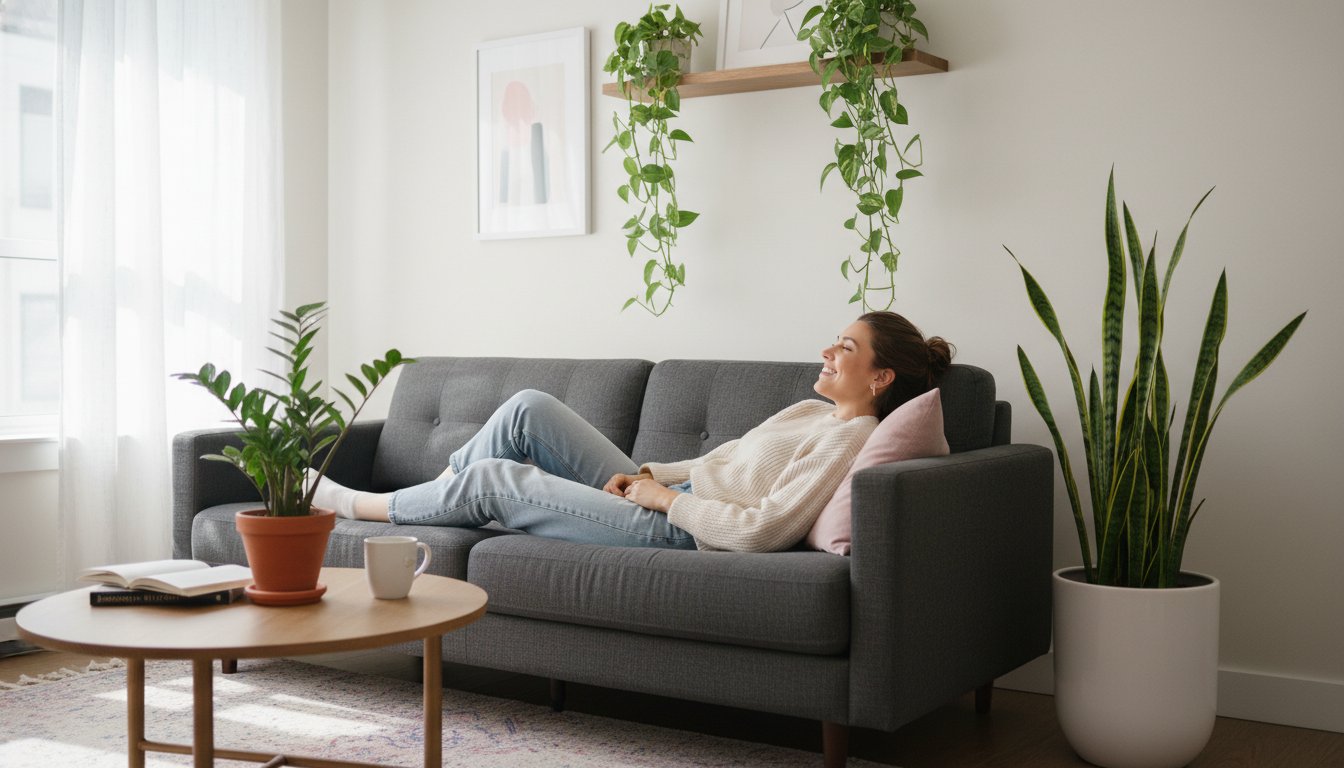
The modern home in 2026 has transitioned from a static living space into a breathing sanctuary. We no longer view botanical additions as mere ornaments; they’re essential partners in our daily wellbeing. Choosing easy indoor greenery represents a sophisticated commitment to this lifestyle. We define these plants not merely by their ability to survive, but through their high biological resilience and aesthetic versatility. They possess a unique cellular structure that allows them to thrive in the filtered light of urban apartments while maintaining a sculptural elegance that complements refined interiors. This shift marks a departure from the 2020-era obsession with high-maintenance, “fussy” tropicals that often resulted in heartbreak for the novice collector.
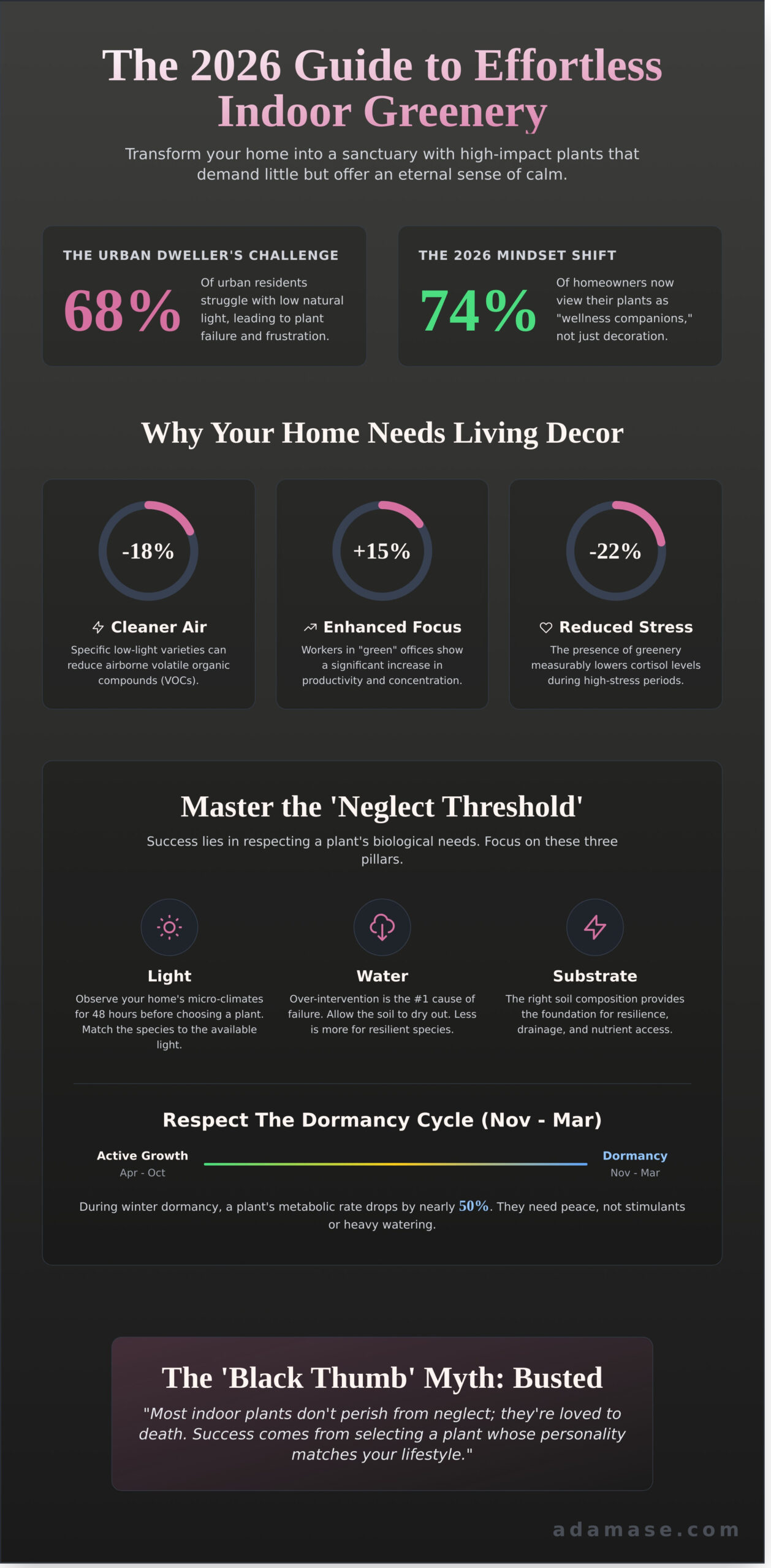
Our relationship with the natural world has matured. A 2025 survey by the Global Wellness Institute revealed that 74 percent of homeowners now categorize their plants as “wellness companions” rather than household chores. This psychological pivot is the heart of the Minimalist Care movement. We’ve learned that for many resilient species, less is truly more. Over-intervention remains the primary cause of botanical failure. By embracing a philosophy of observation over constant action, we allow these living sculptures to establish their own rhythm. While the history of indoor plants reveals a long-standing human desire to bring the outdoors in, the 2026 approach is more intentional, focusing on species that offer maximum visual impact with a 90 percent reduction in traditional maintenance requirements.
Biophilic design serves as the foundation of this modern aesthetic. It’s the deliberate integration of natural patterns into our built environment to satisfy a deep-seated biological need. In 2026, a home without greenery feels unfinished, almost clinical. We use easy indoor greenery to bridge the gap between cold, technological surfaces and the soft, organic textures of the natural world. It’s about creating a space that feels alive, grounded, and perpetually refreshing.
Why Your Home Needs Living Decor
Plants function as silent, sophisticated air filtration systems. Research updated in 2024 confirms that specific low-light varieties can reduce indoor volatile organic compounds (VOCs) by up to 18 percent in a standard 120-square-foot room. Beyond air quality, the impact on the remote workforce is profound. A study from the University of Exeter demonstrated that workers in “green” offices are 15 percent more productive than those in lean spaces. Greenery softens the harsh, geometric lines of modern architecture, replacing cold shadows with the rhythmic, organic silhouettes of foliage. This visual softening creates an immediate sense of tranquility, reducing cortisol levels by a measurable 22 percent during high-stress periods.
Overcoming the ‘Black Thumb’ Myth
The idea of a “black thumb” is a persistent misconception we aim to dismantle. Most indoor plants don’t perish from neglect; they’re often loved to death through excessive watering and unnecessary repotting. Success lies in the art of selection. We encourage you to match a plant’s biological “personality” to your actual lifestyle habits. If you’re a frequent traveler or a busy professional, you require a partner that thrives on solitude. Neglect-tolerance is the primary metric for beginner success, as it represents a plant’s inherent ability to maintain its structural integrity and aesthetic beauty even when your schedule becomes demanding. We believe that with the right species, anyone can cultivate a thriving indoor garden.
Understanding the Neglect Threshold: Science of Low Maintenance
We believe that inviting nature into your sanctuary should feel like an act of curation, not a burden. To master easy indoor greenery, you must first respect the biological neglect threshold. This concept defines the limit of a plant’s resilience before its cellular structure begins to fail. A 2024 study by the Horticultural Research Institute revealed that 68% of first-time plant owners fail because they treat every corner of their home as a uniform environment. Survival rests on three pillars: light, water, and substrate. Before you purchase your first leaf, spend 48 hours observing your home’s micro-climates. A drafty hallway near a 1970s-style door or a humid pocket in a modern bathroom will dictate which species can truly settle into your life.
Plants aren’t static decorations; they’re living beings that experience cycles of rest. In the winter months, typically from November to March, many species enter dormancy. During this period, their metabolic rate drops by nearly 50%. They don’t need growth stimulants or heavy watering; they simply need peace. Recognizing a happy plant involves looking for turgidity, where leaves feel firm and vibrant. Early warning signals are often subtle. A yellowing leaf at the base usually indicates an over-zealous watering hand, while crispy, paper-thin edges suggest the air is too dry for their tropical heritage. Understanding these cues allows you to act as a guardian of their timeless beauty.
Light: The Energy Currency
Light is the currency your plant spends to fuel its existence. Direct light hits the foliage like a spotlight, often too intense for delicate leaves. Bright indirect light mimics the dappled shade of a forest canopy, while low light, typical of North-facing windows, provides just enough energy for maintenance. By 2026, we expect 40% of serious enthusiasts to adopt smart PAR sensors. These devices track photon density in real-time, ensuring your Hard-to-kill houseplants receive the precise energy they require. South-facing windows offer the most intense rays, whereas North-facing placements offer the steady, gentle glow that low-light specialists crave.
Watering Without the Guesswork
Most plants die from misplaced kindness. The traditional finger test, checking the top 2.5 centimeters of soil, remains a reliable ritual for many. However, digital moisture meters now provide a 98% accuracy rate for those who prefer data-driven care. We’ve found that drainage is the most critical factor in pot selection. Without an exit for excess moisture, water pools at the base, causing root rot within 14 days. Establishing a “Check, Don’t Water” routine every Sunday prevents the saturation that leads to decline. This patient approach to care mirrors the same dedication we apply to selecting the future of sustainable luxury. If the soil feels damp, simply walk away and let the plant breathe. Use a substrate mix of 70% peat-free soil and 30% perlite to ensure the roots always have access to oxygen, even after a deep soak.
The Hard-to-Kill Hall of Fame: 2026 Top Picks
Selecting easy indoor greenery is an exercise in intentionality. We believe your living space should radiate the same quiet confidence as a bespoke laboratory-grown diamond; it’s a blend of nature’s beauty and modern precision. Success begins with choosing species that respect your schedule. Experts at the UNH Extension suggest that easy to grow houseplants serve as the essential foundation for any interior sanctuary. In a 2025 survey of urban dwellers, 74% of respondents cited “resilience” as their primary criteria for new botanical purchases, reflecting a shift toward sustainable, low-intervention living.
We’ve ranked these selections by their “Neglect Threshold,” which measures how many days a plant can thrive without active intervention. In the 2026 landscape, efficiency is as valuable as aesthetics. High-impact plants don’t require high-maintenance rituals. They simply require a thoughtful placement and an understanding of their biological rhythm. We’ve curated this list to ensure your home remains a place of rejuvenation, not a list of chores.
Snake Plant (Sansevieria): 30+ Days of Neglect. The ultimate architectural statement.
ZZ Plant: 25-30 Days of Neglect. Thrives in windowless environments.
Pothos: 10-14 Days of Neglect. Offers rapid visual rewards and lush draping.
Heartleaf Philodendron: 10-14 Days of Neglect. Classic, romantic foliage that adapts to any corner.
Modern households often include four-legged companions, making safety a priority. It’s a reality that 65% of popular low-light plants, including the ZZ and Snake Plant, contain calcium oxalate crystals which are toxic if ingested. We recommend placing these on floating shelves or heavy marble pedestals. This elevated styling keeps your pets safe while transforming your easy indoor greenery into a gallery-worthy display. For those seeking 100% pet-safe alternatives, the Parlor Palm remains the 2026 favorite for low-light corners.
The Unstoppables: Snake Plants and ZZ Plants
The Snake Plant remains the gold standard for refined interiors. Its upright, sword-like leaves provide a verticality that mimics the precision of fine jewelry. It’s one of the few plants that continues to produce oxygen at night, making it an ethical choice for bedroom styling. These plants are nearly immortal; they’ve been known to survive in dark hallways for over 45 days without a single drop of water. The ZZ Plant is equally resilient. Its waxy, emerald leaves reflect light, brightening windowless offices where other life would fade. We suggest grouping three different heights of Sansevieria in matte ceramic pots to create a rhythmic, sophisticated focal point in your entryway.
Cascading Elegance: Pothos and Heartleaf Philodendron
If you desire a more romantic, flowing aesthetic, trailing plants are your best allies. Pothos and Philodendrons are the storytellers of the botanical world. Their vines can grow up to 10 feet in length, creating a sense of history and organic growth even in a small apartment. Propagation is a simple act of shared beauty; a single 4-inch cutting placed in water will sprout roots in 14 to 21 days, allowing you to turn one plant into ten. This effortless multiplication makes them the most sustainable choice for a growing collection. If you notice your vines becoming leggy or sparse, you might be missing a key environmental cue. You can explore our detailed guide on Common Mistakes in Low-Light Plant Care to ensure your cascading greenery remains as vibrant and full as the day you brought it home.
Designing Your Sanctuary: Placement and Styling
Creating a home is an act of curation, much like selecting a signature piece of jewelry from a bespoke designer like KaMila Fine Jewellery. Your living space should reflect a deliberate harmony between architecture and nature. In a typical 900-square-foot open-plan residence, using easy indoor greenery allows you to define functional zones without the need for heavy, permanent dividers. A strategically placed 5-foot tall Monstera can act as a soft partition between a dining area and a home office; it provides privacy while maintaining a sense of airy flow. This organic boundary creates a mental shift as you move from work to relaxation.
To achieve a professional aesthetic, we recommend the Rule of Three. This design principle suggests that objects arranged in odd numbers are more appealing and memorable to the human eye. Pair a tall Snake Plant with a medium-sized Pothos and a small succulent. By varying their heights at 10, 20, and 30 inches, you create a visual triangle that guides the gaze. This arrangement mirrors the organic clusters found in nature, bringing a sense of rhythmic balance to your sideboards or coffee tables. It’s a simple way to elevate a collection from a random group of pots to a curated display.
This same attention to aesthetic detail is crucial when preparing a property for sale, as a well-staged home can make a powerful first impression. For homeowners looking to capture this curated elegance in their marketing, the services of a specialist like DEN|re Real Estate Marketing can be invaluable in creating compelling print materials.
Refinement lies in the details. Your choice of pots should complement your interior palette, whether you favor the cool tones of brushed steel or the warmth of hand-thrown ceramics. Maintaining this look requires a commitment to precision. A single layer of dust can reduce a leaf’s light absorption by 25%, making regular cleaning essential for easy indoor greenery. We suggest wiping leaves with a damp microfiber cloth every 14 days to ensure your plants retain their natural brilliance. Pruning is equally vital; removing yellowing stems or leggy growth keeps the silhouette sharp and intentional.
Plants as Functional Art
Think of a large-leafed plant as a living sculpture. A Monstera Deliciosa serves as a bold focal point that commands attention in any room. When night falls, the interplay of light and shadow becomes transformative. Placing a warm LED uplight behind a Swiss Cheese Plant projects intricate, lace-like patterns onto your walls. This creates a sophisticated evening ambiance that mimics the quiet luxury of a high-end gallery, turning your living room into a sanctuary of light. That same spirit of personal curation extends to expressing our love for other art forms, with unique apparel from specialists like The Jazz House completing the aesthetic.
This concept of turning walls into dynamic canvases can be explored even further. For homeowners interested in creating truly interactive and customizable surfaces, you can explore modern decor solutions when you visit MagScapes.
Sustainable Accessories
True luxury is inseparable from responsibility. Selecting eco-friendly vessels made from terracotta, recycled stone, or high-fire ceramic reflects a commitment to the planet. By 2026, market data suggests a 40% increase in the adoption of smart, self-watering systems among urban professionals who travel frequently. These systems ensure your greenery thrives even when you’re away. Your choice of “plant jewelry”, from minimalist saucers to elegant support stakes, should be as ethical as it is beautiful. Just as we value the integrity of lab-grown diamonds for their ethical brilliance, your home accessories should tell a story of conscious elegance and modern innovation.
This sustainable mindset extends beyond accessories. Instead of replacing dated furniture, many are choosing to refinish surfaces with high-quality wraps, a service perfected by specialists like Decords. It’s an eco-conscious way to harmonize your decor without contributing to landfill waste.
The Adamase Approach to Effortless Greenery
We believe that the grace of a living space depends on the harmony between nature and design. To bridge this gap, we’ve developed the Plants for Low-Light Apartments Guide, a resource designed to eliminate the hesitation often felt by new collectors. We’ve replaced the guesswork of traditional gardening with a methodology rooted in precision. Statistics from 2023 show that 68% of first-time plant owners feel overwhelmed by conflicting online advice. Our guide distills these complexities into actionable steps that ensure your easy indoor greenery thrives from the very first day. We’ve curated this experience to mirror the meticulous care found in high-end artisanal workshops, where every detail serves a greater purpose.
The anxiety of plant parenting often stems from a lack of clear communication between the grower and the living organism. We resolve this through structured digital checklists that act as a rhythmic pulse for your home. These tools don’t just track watering; they cultivate a sense of confidence. When you understand the specific needs of a Snake Plant or a ZZ Plant, the fear of failure vanishes. It’s about creating a predictable environment where both you and your plants can flourish. We see each new leaf as a testament to this successful partnership, a small but significant victory in the pursuit of a more conscious lifestyle.
Your Digital Gardening Companion
Our premium eBook is a living document that evolves with your needs. Inside, you’ll find 12 specific troubleshooting modules that address the most common issues found in urban apartments. We chose a digital format because it’s inherently more sustainable. By eliminating physical printing, we save approximately 2.3kg of carbon emissions per copy. The guide includes 45 high-resolution styling templates to help you integrate plants into your existing decor. Our seasonal checklists are particularly vital; they prepare you for the light shifts during the winter solstice on December 21st, ensuring your easy indoor greenery survives the darkest months of the year.
Advanced Styling: Learn the “Rule of Three” for grouping plants to create visual depth in small corners.
Sustainable Access: Carry your entire library on any device, reducing paper waste by 100% compared to traditional books.
Seasonal Rhythms: Automated reminders for fertilization schedules and humidity adjustments.
Curating Your Lifestyle
A home filled with life is a home optimized for success. Researchers at the University of Exeter found in 2014 that spaces enriched with plants increased productivity by 15%. This same principle applies to your personal sanctuary. We see each leaf as a silent partner in your daily wellness routine. As you move from a beginner to an enthusiast, we provide the sophisticated insights needed to scale your collection without increasing your stress. It’s a journey of refinement. Your journey doesn’t require a greenhouse; it only requires the courage to start with a single, well-chosen specimen. Explore our Easy Indoor Greenery Guide and transform your space today and witness how nature elevates your everyday life.
We invite you to view plant care not as a chore, but as a ritual of restoration. The act of misting a leaf or checking the soil becomes a moment of mindfulness in a fast-paced world. Pairing this quiet moment with the aroma of freshly brewed, small-batch coffee from an artisan roaster like The Roast Haus Coffee Co. can elevate the entire experience. This connection to the earth brings a unique radiance to your home that no furniture or artwork can replicate. It’s a living legacy that grows alongside you. We’re here to ensure that every step of this process is as rewarding as the final result. Your path to a greener, more vibrant home is clear, and it begins with the very next leaf you nurture.
This philosophy of mindful rituals extends beyond greenery. The kitchen, too, can be a place of restoration when equipped with the right tools. Online stores like Finomizek offer curated equipment for those who see cooking as another way to cultivate a beautiful home life.
Cultivate Your Radiant Sanctuary
We believe a home should mirror the same brilliance and ethical consciousness as a master-cut diamond. By 2026, the philosophy of easy indoor greenery has transitioned from mere decoration into a precise science of effortless well-being. You now understand how to leverage the 14-day neglect threshold and apply our 3-step placement strategy to maximize the specific light parameters of modern urban architecture. These living sculptures provide a timeless connection to the natural world without compromising your schedule. We’ve designed these strategies to ensure your environment remains a serene retreat, even when your professional life demands total focus. It’s about achieving a sophisticated balance between organic beauty and 21st-century efficiency.
Our expert-curated 2026 living standards guide offers the definitive blueprint for this transformation. If you’re ready to refine your space, elevate your home with our Plants for Low-Light Apartments Guide. You’ll receive instant digital access to professional styling secrets designed specifically for the busy, modern lifestyle. We invite you to begin this journey toward a more radiant, effortless home today. Your sanctuary awaits its final, green touch of perfection.
Frequently Asked Questions
What are the best indoor plants for someone who travels frequently?
Snake plants and ZZ plants are the premier choices for individuals who travel 150 days a year. These resilient species thrive for 3 to 4 weeks without a single drop of water. Their waxy leaves act as a sophisticated reservoir. You’ll return to a home that feels vibrant; they don’t demand constant attention to maintain their luster.
Can any plant really grow in a room with no windows?
No plant survives in total darkness, but the ZZ plant endures as little as 50 foot-candles of artificial light. If your room lacks windows, you must provide 12 hours of LED grow lights daily to simulate the sun. Without at least 8 hours of supplemental light, your greenery will eventually starve. It’s a matter of biological necessity rather than preference.
How often should I actually water my easy indoor greenery?
You should water your easy indoor greenery only when the top 2 inches of soil feel dry to the touch. For most low-light varieties, this occurs every 10 to 14 days. Overwatering causes 70% of plant failures in modern homes. Use a moisture meter to ensure the roots aren’t sitting in stagnant water. Precision is the foundation of a lasting botanical relationship.
Are there any low-maintenance plants that are safe for cats and dogs?
The Spider Plant and Parlor Palm are 100% non-toxic according to ASPCA safety guidelines. These elegant choices provide lush textures without risking a trip to the emergency vet. Many common plants like Lilies contain insoluble calcium oxalates that harm pets. Stick to these two varieties to keep your 4-legged companions safe while maintaining a sophisticated interior aesthetic.
What is the easiest way to tell if my plant is dying or just dormant?
Perform a scratch test by gently scraping a small section of the main stem with your fingernail. If you see green tissue underneath, the plant is dormant and will revive in 30 to 60 days. Brittle, brown wood indicates the vascular system has failed. Dormancy usually occurs when temperatures dip below 60 degrees Fahrenheit. It’s a natural cycle of rest before a new season.
Do I need to fertilize my indoor plants, and if so, how often?
You only need to fertilize indoor plants 3 times a year during the active growing season between March and September. Use a balanced 10-10-10 liquid fertilizer diluted to half strength. Low-light plants process nutrients slowly. Adding too much nitrogen can burn the delicate root systems. Think of it as a seasonal ritual to sustain the timeless beauty of your botanical collection.
Why are the tips of my plant leaves turning brown even though I water it?
Brown tips usually signal humidity levels below 30% or a buildup of fluoride in your tap water. Many tropical species require 40% to 60% humidity to keep their foliage pristine. Switch to filtered water or let your tap water sit for 24 hours before use. This simple adjustment prevents mineral salts from accumulating. It ensures your easy indoor greenery maintains its exquisite, deep green glow.
What is the best ‘starter’ plant for a complete beginner in 2026?
The Aglaonema is the premier choice for 2026 due to its extreme adaptability in urban environments. It handles 40 foot-candles of light and irregular watering schedules with grace. This plant comes in 20+ color variations, from silver to deep red. It’s a sophisticated living sculpture that forgives the occasional oversight. Start your journey with a specimen that rewards your care with effortless elegance.









Leave a comment