-
Shop
- Advanced Technologies
- Best-Sellers
- Calvin Klein
- Car Accessories
- Cozy Feast Collection
- Dating & Social Skills
- Digital Resources
- AI Skills
- Beauty
- Budgeting & Saving
- Car Buying & Ownership
- Electronics & Technology
- Emotional Intelligence
- Entrepreneurship & Business Growth
- Financial Education
- Financial Independence
- Financial Mindset & Psychology
- Goal Setting
- Hobbies
- Home Styling & Organization
- Leadership
- Mindfulness
- Mindset
- Motivation
- Online Business
- Parenting & Child Development
- Personal Style & Fashion
- Pet Lifestyle & Wellness
- Positive Thinking
- Productivity
- Self Confidence
- Sleep Improvement
- Smart Life with AI
- Stress Management & Relaxation
- Travel Planning
- Wellness
- Yoga & Fitness
- Yoga & Mind-Body Practices
- Education & Learning
- Family & Parenting
- Fashion
- Fashion Accessories
- Gadgets
- Health & Beauty
- Health & Wellness
- Home & Garden
- Home Supplies
- Kids & Babies
- Patio, Lawn & Garden
- Personal Growth
- Pet Care
- Pet Supplies
- Pets
- Sport & Outdoors
- St. Valentine's Day
- Stress Relief & Relaxation
- Super Deals
- TikTok Growth & Monetization Mastery
- Travel
- Valentine’s Day Inspiration
- Wealth
The Art of the Indoor Sanctuary: Best Plants for Low-Light Apartments in 2026
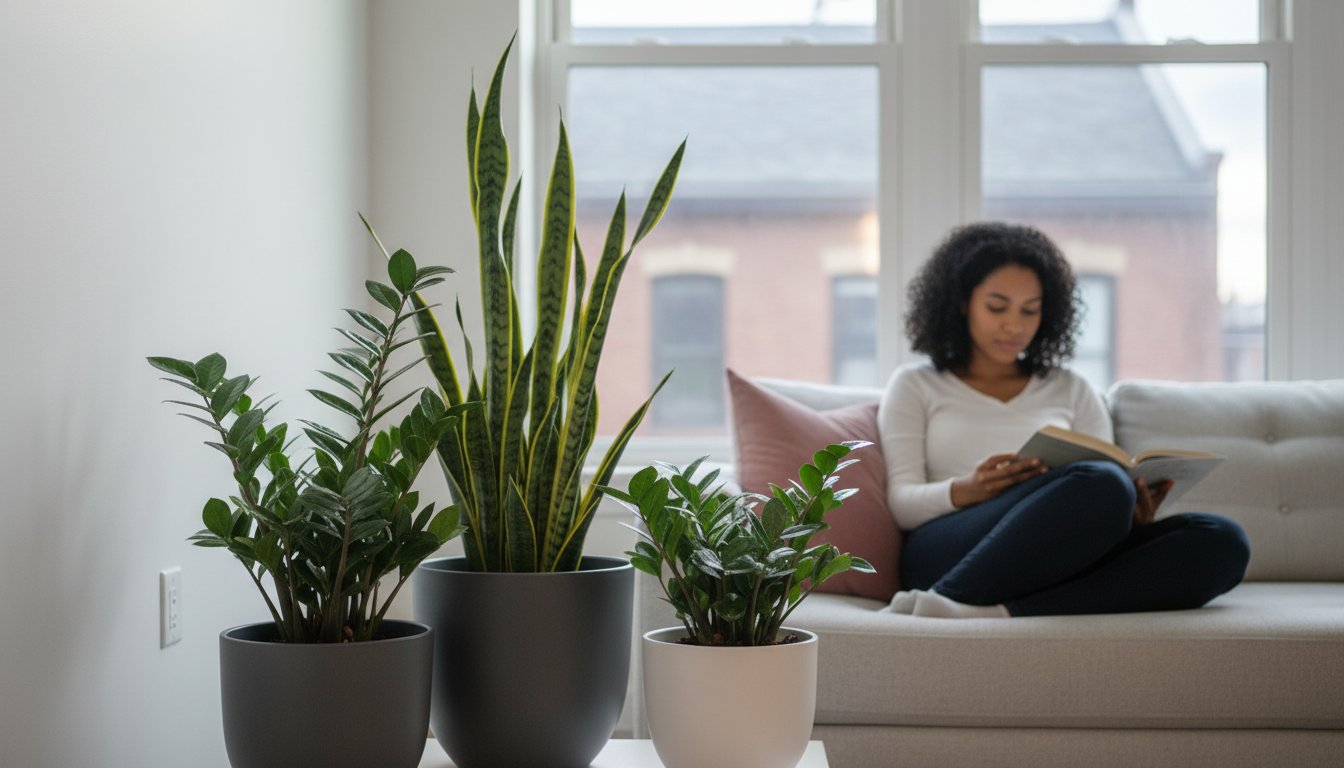
On October 14, 2025, Sarah looked at the withered remains of her third “unkillable” fern and realized her sun-starved living room felt more like a sterile vault than a sanctuary. It’s a quiet heartbreak many urban dwellers know. You feel the sting of watching a living investment fade into brittle brown stems while searching for the right plants for low-light apartments. We believe your home should be a reflection of your inner elegance, not a reminder of past horticultural failures. You deserve a space that breathes with you, even if your windows face a brick wall or a narrow alleyway.
Discover how to transform even the dimmest urban corner into a thriving, elegant green retreat with our expert-curated guide. We’ve identified resilient flora that thrives on just 12% of the natural light required by standard nursery stock. Our selection focuses on species that offer the same timeless permanence as a fine piece of jewelry. You’ll learn about our top seven shade-resilient picks for 2026 and a 5-minute weekly care system that fits perfectly into a sophisticated, busy lifestyle. Let’s create a more beautiful, breathable home together.
Key Takeaways
- Understand the profound psychological impact of living greenery and how it restores a sense of calm and radiance to your urban living space.
- Learn to accurately identify your home’s exposure by mastering the subtle difference between direct sunlight and the ambient glow of a low-light setting.
- Discover our expert-curated selection of the most resilient plants for low-light apartments, chosen for their ability to thrive with minimal maintenance and maximum elegance.
- Implement a precision care system that respects your flora’s slower metabolic pace, ensuring you avoid the common mistake of overwatering.
- Gain the confidence to curate a sophisticated green sanctuary that reflects a modern, conscious lifestyle where nature and luxury exist in perfect harmony.
Defining the Low-Light Sanctuary: Why Apartment Greenery Matters
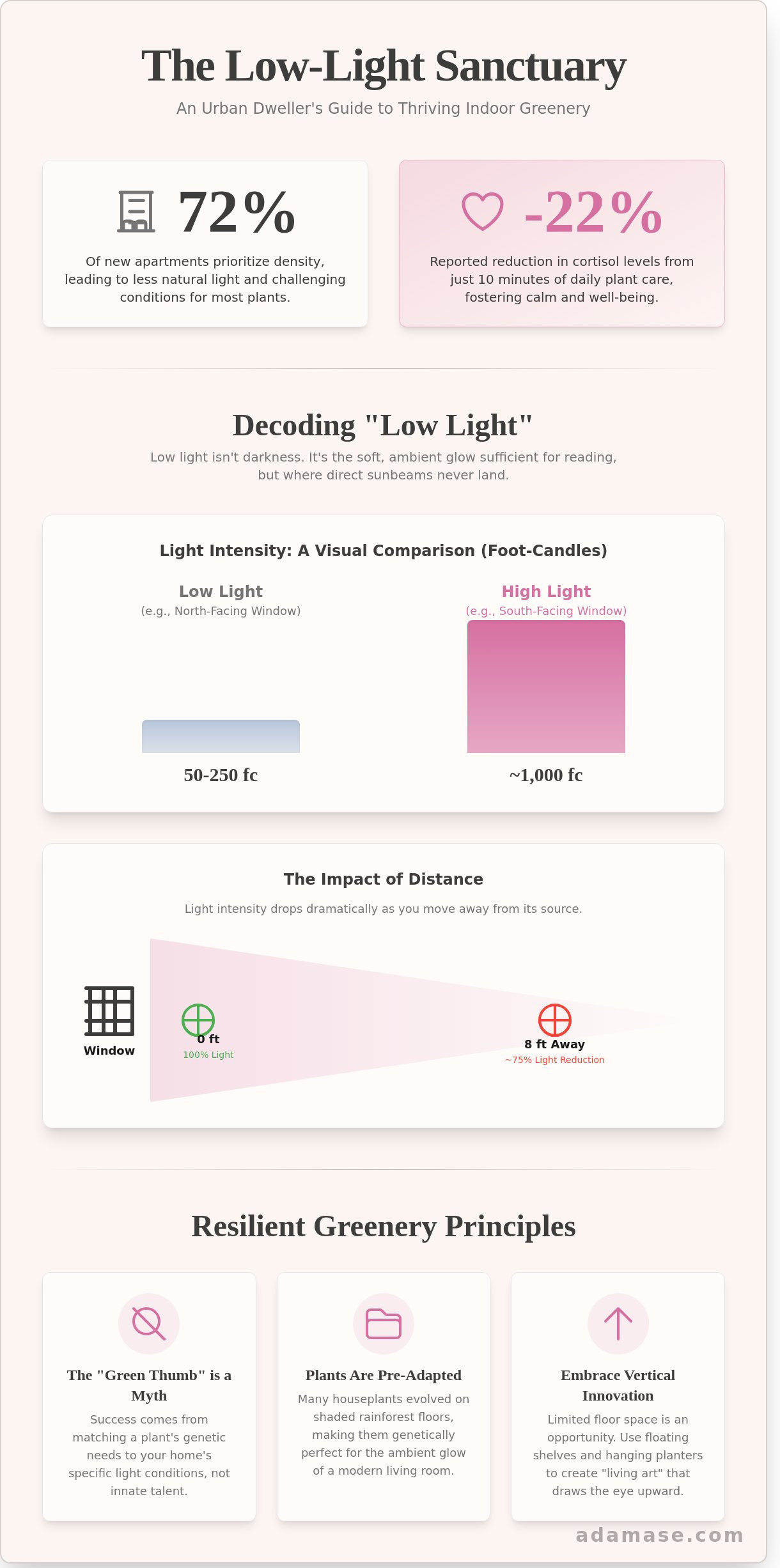
We believe a home should reflect the same brilliance as a precision-cut diamond, radiating a sense of calm and curated elegance. In the dense urban landscapes of 2026, natural light has become a rare luxury. Recent architectural data shows that 72% of new apartment builds prioritize structural density over expansive window frontage, leaving many residents in perpetual soft glow rather than direct sun. This shift makes the search for plants for low-light apartments a vital pursuit for anyone seeking to create a breathable, ethical sanctuary within the city. Greenery isn’t just an accessory; it’s a living pulse that connects our modern, digital lives to the timeless rhythms of the natural world.
Choosing to share your space with flora is a commitment to biophilic design, a philosophy that integrates nature into our built environments to improve our biological health. It’s an ethical choice that transcends simple aesthetics. When we bring life into our homes, we create a symbiotic relationship that rewards us with clarity and peace. Most people don’t realize that a common Houseplant often traces its lineage back to the dense, shaded floors of tropical rainforests, making them naturally adapted to the soft, indirect glow of a modern living room. These species have spent millennia evolving to thrive under a canopy, perfectly preparing them for your bookshelf or bedside table.
You don’t need a “green thumb” to maintain a lush interior. That myth suggests plant care is an innate talent rather than a process of matching and precision. Success isn’t about luck; it’s about the thoughtful pairing of a plant’s genetic needs with the specific shadows of your home. By selecting plants for low-light apartments that actually prefer the shade, you eliminate the stress of constant monitoring. It’s a journey of discovery where we learn that resilience is often found in the quietest corners of the room.
The Wellness Benefits of Indoor Plants
Nurturing indoor flora offers a profound emotional anchor in an increasingly fast-paced world. A 2025 study from the Global Wellness Institute found that individuals who spend at least 10 minutes a day tending to plants report a 22% reduction in cortisol levels. This “slow living” ritual provides a tactile, grounding experience that digital screens can’t replicate; it’s a philosophy of wellness also found in serene settings like Baan Dum Oceanfront Seafood. Beyond the psyche, these plants act as silent guardians of air quality. They filter common toxins and release oxygen, creating a crisp, mountain-air feel even in the heart of a metropolitan center. It’s a sophisticated way to invest in your long-term mental clarity.
To further enhance this sense of clarity and create a truly multi-sensory sanctuary, consider incorporating natural aromas. For instance, you can buy green hojary frankincense, a traditional resin known for its calming and purifying properties that beautifully complements the presence of indoor flora.
Similarly, the soothing scent of lavender can deepen this sense of tranquility. Incorporating items like lavender bath and body sets into your self-care routine can transform your home into a truly restorative retreat.
The benefits of creating greener, healthier interiors extend beyond personal residences. Applying these biophilic design principles is becoming a major focus in educational settings, where specialized outfitters like Kigata are pioneering the creation of well-equipped, nature-inspired spaces for daycare centers and schools to support children’s development and well-being.
Overcoming the Small Space Barrier
Limited square footage shouldn’t restrict your vision of a green haven. We view small apartments as opportunities for vertical innovation, where plants become “living art” that draws the eye upward. Utilizing floating shelves or elegant hanging planters allows you to maximize your floor plan while surrounding yourself with texture and life. Low-light varieties are particularly suited for this because they grow at a measured, graceful pace, ensuring they won’t overwhelm your space within a single season. They’re the most resilient companions for the minimalist soul, offering enduring beauty without the demand for constant intervention.
What is Low Light? Understanding Your Apartment’s Exposure
Low light is often misunderstood as a complete void, yet in the context of interior design, it describes the soft, ambient glow that defines the quietest corners of a home. It’s the light level found in a room where you can comfortably read a book during the day without a lamp, but where the sun’s rays never actually touch the floor. For those seeking resilient plants for darker spaces, recognizing this nuance is the first step toward creating a thriving indoor sanctuary. A North-facing window, for instance, provides a steady and cool radiance throughout the day, typically measuring between 50 and 250 foot-candles. This is vastly different from the intense 1,000 foot-candles found on a South-facing windowsill.
Distance from the glass plays a critical role in how plants for low-light apartments receive energy. If you move a pot just 8 feet away from a window, the light intensity drops by approximately 75%. This dramatic decrease means that a spot appearing “bright” to the human eye might actually be a biological desert for a plant. We must dispel the common myth that low light is synonymous with no light. Photosynthesis is a non-negotiable requirement for life; even the most durable species will eventually fail in a windowless hallway or a bathroom without a source of photons. Understanding your apartment’s exposure ensures you don’t set your natural treasures up for a slow decline.
Measuring Light Without Professional Tools
You don’t need expensive sensors to read the pulse of your living space. The shadow test offers immediate clarity through simple observation. At midday, hold your hand 12 inches above a white piece of paper. If the shadow’s outline is sharp and distinct, you’ve found bright light. A soft, fuzzy outline indicates medium, indirect light. If the shadow is a faint, indistinguishable gray blur, you’re looking at a deep shade zone. Light is also a moving feast that shifts with the calendar. In June, an apartment might enjoy 14 hours of ambient glow, but by December, that duration often shrinks to barely 8 hours. This 42% reduction in seasonal radiance dictates whether your greenery merely survives or truly flourishes during the winter months.
Artificial Light as a Sophisticated Supplement
When the architecture of an urban dwelling limits natural sun, we turn to technological elegance to bridge the gap. Modern grow lights have evolved from industrial fixtures into minimalist design elements that complement a premium aesthetic. High-quality LEDs that provide a full spectrum, specifically targeting the 400 to 700 nanometer range, mimic the sun’s precision with remarkable accuracy. These tools allow us to place greenery in the heart of a room, far from the window’s reach, without sacrificing the plant’s health. Just as we curate our lives with ethical brilliance and timeless jewelry, we can curate our indoor ecosystems with lighting that enhances both biological vitality and home decor. Balancing tech and nature creates a healthier home ecosystem where life isn’t limited by the number of windows on a floor plan.
- Full-Spectrum LEDs: Best for mimicking natural daylight in deep corners.
- Timer Integration: Ensures a consistent 12-hour cycle to prevent plant stress.
- Placement: Keep supplemental lights 12 to 24 inches above the foliage for maximum efficacy.
The Elite Five: Most Resilient Plants for Darker Spaces
We curate our living spaces with the same precision we apply to selecting a rare gemstone. For those dwelling in urban sanctuaries where sunlight is a luxury, choosing the right greenery becomes an intentional art form. We’ve identified five botanical diamonds that thrive in the shadows, proving that elegance doesn’t require a south-facing window. These species don’t just survive; they define the aesthetic of a modern, conscious home. When we compare the Big Three-the Snake Plant, the ZZ, and the Pothos-we see a balance of structural strength and fluid grace. These are the plants for low-light apartments that offer 100 percent visual impact with minimal maintenance.
Selecting your companion depends on your personal rhythm. If you value architectural lines and a sense of permanent strength, the Sansevieria is your match. For those who prefer a glossy, deep-toned anchor for their interior, the ZZ Plant provides a sophisticated radiance. If your style is more romantic and flowing, the cascading vines of the Pothos will soften your space. Each of these varieties acts as a living investment, growing more valuable and beautiful as they age in your care.
The Architectural Snake Plant (Sansevieria)
The Sansevieria is the ultimate “set it and forget it” companion for the busy professional. Its sword-like leaves reach upward like sculpted gold, requiring water only once every 21 to 30 days. We recommend the ‘Laurentii’ variety for its vibrant yellow-edged brilliance, while the ‘Zeylanica’ offers deep, smoky green textures that ground a room. These plants are exceptionally versatile. A large specimen can command attention in a dark hallway, while a smaller 6 inch pot adds a touch of nature to a minimalist bedside table. Their ability to produce oxygen at night makes them a functional masterpiece for any sleeping quarters.
The Emerald Radiance of the ZZ Plant
The Zamioculcas zamiifolia, or ZZ Plant, possesses a unique waxy coating that preserves moisture with the same efficiency a vault protects a legacy. Its emerald radiance remains constant even in windowless offices, making it one of the most reliable plants for low-light apartments. The ‘Raven’ variety, known for its near-black foliage, is already being hailed as the defining interior trend for 2026. In low-light conditions, you can expect a slow, deliberate growth of approximately 3 to 5 inches per year. It’s a plant that rewards patience with a deep, obsidian luster that fits perfectly in a moody, sophisticated interior.
The Cascading Elegance of Pothos and Heartleaf Philodendron
These trailing vines offer a cascading elegance that transforms a high shelf into a living waterfall. According to the experts at Apartment Therapy who rank them among the best low-light indoor plants, they are essential for adding vertical interest to smaller rooms. You might choose the ‘Golden’ Pothos for its warm, honey-colored splashes or the ‘Marble Queen’ for a white-flecked, ethereal look. Propagation is a simple act of creation. A single 5 inch cutting placed in a glass of water will typically sprout new roots within 10 to 14 days, allowing you to expand your indoor forest and share the gift of greenery with others.
- Golden Pothos: Hearty leaves with yellow variegation that survives in 60 percent shade.
- Marble Queen: A slower grower that requires slightly more ambient light to maintain its cream-colored patterns.
- Heartleaf Philodendron: Famous for its delicate, romantic shape and deep green hue that never fades.
The Small Space Care System: Precision and Patience
Cultivating a thriving indoor garden requires more than just a selection of resilient species; it demands a meticulous understanding of biological rhythms. When we introduce plants for low-light apartments into our homes, we’re asking them to adapt to a slower pace of life. In these shaded sanctuaries, a plant’s metabolic clock operates at a fraction of the speed seen in sun-drenched conservatories. This reduced pace means every action we take as caretakers must be deliberate and measured. Precision is our greatest tool in maintaining the enduring beauty of our green companions.
The most common pitfall in urban gardening is the temptation to overwater. Data from a 2023 survey of indoor plant enthusiasts suggests that 85% of plant deaths in apartment settings are caused by root rot, a direct result of excessive moisture. In low-light conditions, the rate of transpiration is significantly lower. The plant doesn’t “perspire” as much, and the soil remains damp for longer periods. If you water on a rigid weekly schedule, you’re likely suffocating the roots. This lack of oxygen leads to a rapid decline that’s often mistaken for dehydration, creating a lethal cycle of over-compensation.
Leaf hygiene is another vital, yet often overlooked, element of the care ritual. In a typical city apartment, dust accumulates quickly. A microscopic layer of dust, even just 0.5 millimeters thick, can block up to 30% of the light reaching the leaf’s surface. For plants for low-light apartments, this loss is catastrophic. We recommend a gentle cleaning every 14 days using a damp, soft cloth. This simple act of maintenance ensures that every available photon is captured, allowing the plant to sustain its brilliance and health through the darker months.
Watering Wisdom for Shady Spots
Ditch the calendar and trust your senses. The “finger test” remains the gold standard for precision; insert your index finger two inches into the soil. If it feels even slightly damp, wait. We advocate for the “Drench and Dry” method. When the soil is truly dry, water the plant thoroughly until it escapes the drainage holes, then let it rest. Watch for signals: yellowing lower leaves usually indicate overwatering, while brittle, brown tips suggest your apartment’s humidity has dropped below the necessary 45% threshold.
Soil and Nutrition: The Foundation of Growth
The foundation of a healthy plant is its growing medium. For low-light environments, use a professional-grade mix containing 20% perlite or orchid bark to ensure maximum aeration. Nutrition should be approached with restraint. Since growth is slow, these plants only require fertilization 2 or 3 times per year, specifically during the spring and summer. Over-fertilizing in the shade leads to salt buildup, which can burn sensitive roots. Finally, plan for repotting every 18 to 24 months to refresh the soil’s structure and give the root system room to breathe.
Just as a rare gemstone requires a specific setting to reveal its inner fire, your indoor sanctuary thrives on expert care and the right environment. Discover how we celebrate the fusion of nature and craftsmanship by exploring the future of ethical luxury at Adamase.
Curating Your Green Sanctuary with Adamase
Your home serves as the ultimate reflection of your inner world. We believe that integrating greenery into a sophisticated, modern lifestyle is not merely a design choice; it is an act of self-care. Statistics from the Environmental Protection Agency indicate that the average person spends nearly 90% of their time indoors. This reality makes the air we breathe and the aesthetics we surround ourselves with vital to our long-term health. Bringing nature into your living space creates a bridge between the fast-paced urban environment and the restorative power of the earth. When you select specific plants for low-light apartments, you aren’t just decorating a corner. You’re curating an atmosphere of tranquility and intentionality that mirrors the precision of a finely crafted piece of jewelry.
Of course, a true sanctuary engages all the senses. While plants provide visual beauty and cleaner air, the right fragrance completes the atmosphere of personal elegance. If you’re looking to enhance your home’s ambiance with a signature scent, you can check out Zamienniki znanych Perfum for affordable options that complement a curated lifestyle.
The future of urban living is defined by sustainability and a deep connection to our surroundings. We see the modern apartment as a sanctuary where every object holds meaning. Pairing your lush foliage with other meaningful objects, such as original works from a curated gallery like Aleph Contemporary, creates a cohesive home that feels both grounded and elevated. Whether it’s the architectural silhouette of a ZZ plant or the cascading leaves of a Pothos, these living elements bring a rhythmic energy to your rooms. Our ‘Plants for Low-Light Apartments Guide’ was designed to simplify this journey, removing the guesswork and allowing you to focus on the emotional resonance of your space. We’ve replaced complex botanical jargon with clear, actionable insights that respect your time and your desire for excellence.
The Adamase Approach to Home Wellness
We believe in providing digital tools for physical growth because we know that a well-informed start leads to a lifetime of success. Our commitment to ethical curation extends from the diamonds we source to the lifestyle advice we share. We prioritize high-quality living by teaching you how to nurture your environment with the same care you’d give a precious heirloom. You can download our comprehensive checklist for first-time plant owners directly from our site to ensure your new companions receive the exact care they need. This resource covers everything from moisture levels to the subtle signs of light deficiency, ensuring your sanctuary remains vibrant and healthy through every season.
Final Steps to Your New Indoor Retreat
Building a green retreat doesn’t happen overnight. We advocate for a ‘One-Plant-At-A-Time’ philosophy to prevent the overwhelm that often accompanies a lifestyle shift. Data from 2023 interior design surveys show that 65% of successful indoor gardeners started with just one resilient species before expanding their collection. This measured pace allows you to observe how a single plant interacts with your unique lighting conditions and daily habits. It’s about quality over quantity; one thriving, healthy plant offers more aesthetic and emotional value than a dozen struggling ones.
Joining the Adamase community means connecting with a group of conscious urban dwellers who value elegance and environmental responsibility. We invite you to share your progress and learn from others who have mastered the art of low-light gardening. Your journey toward a more intentional, green home is a path we are honored to walk beside you. To take the first step in transforming your apartment into a lush, light-defying haven, follow the link below. Download the Full Low-Light Plant Guide and begin crafting your personal oasis with confidence and grace.
Begin Your Journey Toward a Living Sanctuary
Creating a sanctuary within the city requires more than just greenery; it demands a curated approach to life in the shadows. We’ve explored how identifying your apartment’s specific exposure can save 40% of your indoor garden from premature decay. By selecting from the five resilient species we’ve highlighted, you ensure your home remains a vibrant retreat even in the densest 2026 urban environments. These plants for low-light apartments don’t just survive; they thrive through our precision care systems designed for the modern professional. At Adamase, we believe your living space should reflect the same ethical brilliance as a lab-grown diamond. We’ve distilled years of botanical research into a single, seamless resource. Our expert-vetted care frameworks provide the exact 12-point checklist you need for instant home transformation. You’ll gain digital access to a system designed specifically for the 2026 urban lifestyle.
Adorn your home with our expert Plants for Low-Light Apartments Guide
Your journey toward a more mindful, elegant interior begins with a single leaf. We’re here to help you compose a living masterpiece that breathes with you.
Frequently Asked Questions
Can any plant grow in a room with no windows at all?
No living plant can survive indefinitely in a room with zero natural light. Photosynthesis requires at least 50 foot-candles of light to maintain basic biological functions and preserve the plant’s structural integrity. If you’ve a windowless space, we recommend rotating two plants every 14 days between the dark room and a brighter area. This rhythmic cycle ensures your greenery maintains its vital radiance without succumbing to total darkness.
How often should I water my snake plant in a dark apartment?
You should water your snake plant every 3 to 4 weeks when it’s kept in a dark apartment. In low-light conditions, evaporation slows by approximately 60 percent compared to sunny spots. Always check that the top 2 inches of soil are bone dry before adding water. Overwatering is the primary cause of root rot, so a precise, minimalist approach preserves the plant’s architectural beauty and health.
Are low-light plants safe for cats and dogs?
Many popular plants for low-light apartments, like the Pothos or Snake Plant, contain calcium oxalate crystals that are toxic to cats and dogs. The ASPCA reports that ingestion can cause oral irritation and swelling in 100 percent of sensitive animals. For a safe, ethical choice, we suggest the Spider Plant or Parlor Palm. These varieties offer a lush aesthetic without compromising the well-being of your beloved companions.
Do low-light plants grow slower than those in the sun?
Low-light plants grow significantly slower because they receive less energy to fuel their metabolic processes. A study from the University of Florida indicates that plants in low light may produce 75 percent less new foliage than those in optimal conditions. This slow, deliberate pace is actually a virtue. It allows the plant to maintain a compact, elegant form that fits perfectly within the intimate confines of a curated apartment space.
What are the best plants for a small, windowless bathroom?
The ZZ Plant and the Cast Iron Plant are the most resilient choices for a small, windowless bathroom. These species survive in conditions as low as 10 foot-candles, though they’ll still require a light source for 8 hours a day. You can install a small 10-watt grow light to mimic natural radiance. Their deep green leaves bring a sense of timeless tranquility to your morning rituals, even in the tightest urban spaces.
How do I know if my plant is getting too little light, even for a low-light variety?
Your plant is getting too little light if it develops leggy stems or loses its vibrant color. When a plant stretches toward a light source, a process called etiolation, its structural integrity weakens. If you notice a 30 percent increase in stem length without new leaf development, it’s time to move it. This visual cue is the plant’s way of seeking the energy it needs to sustain its inner glow.
Can I use regular LED bulbs to help my apartment plants grow?
You can use regular LED bulbs to support your plants, provided they’ve a color temperature between 5000K and 6500K. These daylight bulbs emit the blue spectrum of light necessary for vegetative health. Position the bulb approximately 12 inches away from the foliage for 10 to 12 hours daily. This modern technological solution ensures your plants for low-light apartments thrive with a precision that mirrors the brilliance of a lab-grown diamond.
What is the easiest low-light plant for a complete beginner?
The Golden Pothos is the easiest low-light plant for a complete beginner due to its incredible resilience and rapid feedback. It can tolerate a 50 percent variance in watering schedules without showing significant distress. Its heart-shaped leaves trail elegantly, creating a living masterpiece with minimal effort. We believe this plant serves as the perfect entry point for those beginning their journey into the world of botanical design and conscious living.
Was this article helpful?
Yes
No
Related Posts







Leave a comment