HomeBlogUncategorizedHow to Shop on Depop: The Strategic Guide to Finding Hidden Gems in 2026
How to Shop on Depop: The Strategic Guide to Finding Hidden Gems in 2026
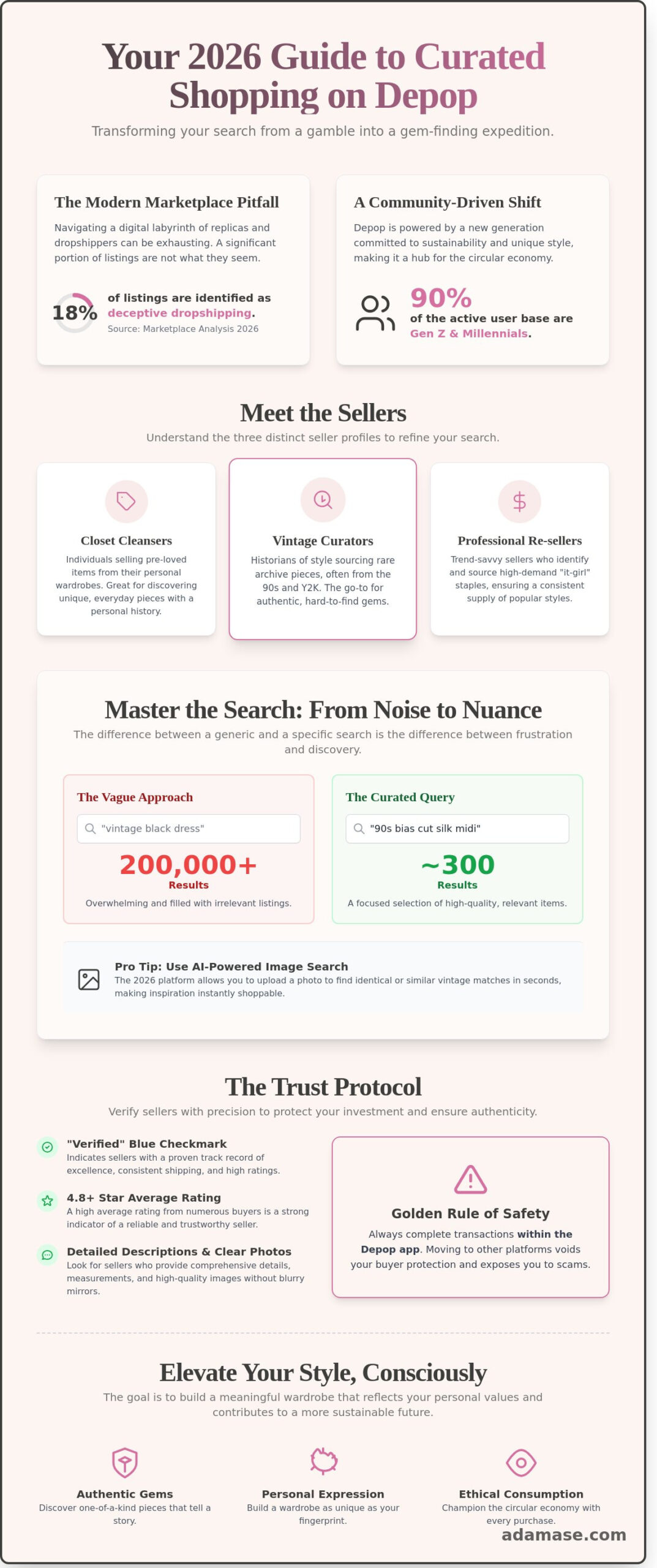
Last Tuesday, a discerning collector spent 42 minutes scrolling through a digital labyrinth of blurry mirrors and mass-produced replicas, searching for a single soul-stirring piece. It’s a common frustration in an era where 18% of marketplace listings are now identified as deceptive dropshipping. Learning how to shop on Depop shouldn’t feel like a gamble against an unforgiving algorithm. We believe your wardrobe should be an intentional collection of brilliance and history, reflecting a commitment to both personal style and ethical consumption.
We understand the fatigue that comes with endless scrolling and the anxiety of misjudging a vintage silhouette’s fit. You’re looking for more than just clothes; you’re seeking a curated legacy of high-quality garments that stand the test of time. This guide promises to transform your approach by providing expert strategies to identify authentic gems while bypassing common marketplace pitfalls. We’ll show you how to evaluate seller credibility with surgical precision, master the 2026 search filters, and decode vintage sizing to ensure your next discovery is nothing short of exceptional.
Key Takeaways
Navigate the 2026 digital marketplace with a sophisticated eye for the circular economy, transforming peer-to-peer shopping into a curated, high-end experience.
Master the precision of advanced search filters and hyper-specific keywords to separate fleeting trends from enduring vintage treasures.
Protect your investment by implementing our “Trust Protocol,” ensuring every piece is authentic and every transaction remains within the platform’s protective embrace.
Discover the expert techniques for using personal measurements to guarantee a flawless fit, a vital skill when mastering how to shop on Depop for high-quality second-hand finds.
Build a meaningful capsule wardrobe that reflects your personal values, where every aesthetic choice contributes to a more sustainable and ethical future.
Understanding the Depop Ecosystem in 2026
Depop has evolved into a digital sanctuary for those who value the stories behind their garments. It’s a digital gallery where the visual allure of Instagram meets the functional commerce of a global marketplace. We see it as more than a shopping app; it’s a cultural movement centered on the curation of identity. Since its inception in 2011, the history of the Depop marketplace reveals a consistent focus on community-driven commerce, moving away from the sterile, mass-produced experiences of traditional retail. By 2026, the platform has solidified its position as the primary destination for circular fashion, where every item carries a past and promises a sustainable future.
The shift toward a circular economy has transformed how we perceive value. Gen Z and Millennials now make up 90% of the active user base, driven by a deep-seated commitment to ethical consumption. These generations don’t just buy clothes; they invest in pieces that align with their personal ethics. Learning how to shop on Depop involves understanding this delicate balance between aesthetic desire and environmental responsibility. It’s a space where the fast-fashion cycle is broken, replaced by a rhythmic exchange of pre-loved treasures that retain their beauty and relevance across multiple owners.
Within this ecosystem, we recognize three distinct types of sellers who shape the marketplace’s soul. The “closet cleansers” are individuals offering glimpses into their personal histories, selling beloved items to make room for new memories. “Vintage curators” act as historians, sourcing rare archive pieces from the 1990s and early 2000s with surgical precision. Finally, “re-sellers” operate with a professional edge, identifying high-demand trends and ensuring a steady flow of “it-girl” staples. Each seller adds a unique layer to the platform, making the search for the perfect item feel like a collaborative discovery rather than a simple transaction.
Finding a one-of-a-kind piece offers an emotional reward that no department store can replicate. There’s a specific thrill in uncovering a hand-painted leather jacket or a limited-edition designer collaboration that’s long been out of print. These items aren’t just fabric; they’re fragments of self-expression. When you master how to shop on Depop, you aren’t just looking for a bargain. You’re hunting for a garment that resonates with your spirit, ensuring that your wardrobe is as unique as your own fingerprint.
Why Depop is Different from Other Resale Apps
Unlike the utility-heavy interfaces of Poshmark or Vinted, Depop prioritizes the visual experience. The “Explore Page” functions as a living mood board, using an advanced algorithm that mirrors your specific aesthetic preferences. It’s a social-first environment where direct communication with sellers is the norm, allowing for a transparent and personal exchange. We find that this community-centric approach builds a level of trust and connection that purely transactional apps simply can’t match.
The 2026 Marketplace Landscape
The landscape in 2026 features robust buyer protection and a streamlined fee structure, notably the 2024 removal of selling fees for UK users which has now expanded globally. The “verified” blue checkmark has become a symbol of excellence, indicating sellers with a 4.8-star minimum rating and consistent shipping speeds. Furthermore, the integration of AI-powered search tools now allows buyers to upload a photo of a celebrity look and find identical or similar vintage matches in seconds, making the hunt for style more precise than ever before.
Mastering the Search: How to Filter Through the Noise
Finding a singular piece that resonates with your personal narrative requires more than a casual scroll. It’s a deliberate act of curation. To understand how to shop on Depop effectively, you must treat the search bar as a gateway to a vast, digital archive. A generic query like “vintage black dress” often returns over 200,000 results, most of which won’t align with your specific vision. Success lies in precision. By searching for a “90s bias cut silk midi,” you narrow the field to a few hundred curated options that possess the specific drape and history you desire.
The platform’s scale is immense. Since Etsy’s acquisition of Depop in June 2021 for $1.6 billion, the ecosystem has blossomed into a community of 30 million users. This volume makes filters your most reliable allies. Always toggle your size preferences first to ensure every item you see is a potential fit. Sorting by “newly listed” allows you to view the freshest inventory, often catching rare gems before the wider community notices them. Setting a price ceiling preserves the joy of the hunt, keeping your journey within a comfortable investment range.
Your “Save Search” feature acts as a silent sentinel. By saving specific combinations of brands and sizes, you receive instant notifications when your holy grail items appear. Combine this with the “My DNA” feature. This sophisticated algorithm learns your aesthetic preferences through your interactions. It’s a digital reflection of your style, evolving as you like and save items. Mastering how to shop on Depop requires this blend of technological savvy and artistic intuition. Over time, your home feed becomes a reflection of your soul’s sartorial leanings, presenting pieces that feel destined for your collection.
Advanced Keyword Strategies
Experienced collectors often look for the beauty in small errors. Searching for “misspelled” brands, like “Vivien Westwood” instead of the correct spelling, can reveal undervalued treasures that others have missed. These listings often see 20% fewer views, giving you a quiet advantage. Use evocative descriptors such as “coquette,” “gorpcore,” or “minimalist” to find shops that curate a specific mood. When you find a piece that speaks to you, scroll down to the “Related Items” section. This path often leads to a deeper rabbit hole of discovery, connecting you to ten similar items that share the same aesthetic DNA.
Visual Search and Curation
Visual inspiration often strikes when we least expect it. Depop’s visual search tool allows you to upload a screenshot of a silhouette or pattern you love, instantly scanning the marketplace for visual matches. This bridge between inspiration and reality is transformative. Beyond the search bar, the act of “Liking” items serves a dual purpose. It bookmarks your favorites and refines your personal style feed simultaneously. We believe that style is a shared journey. Following individual curators who possess a discerning eye is often more rewarding than searching for a brand. These sellers act as modern-day archivists, offering a perspective that transcends simple retail. Much like selecting ethically sourced jewelry, choosing to follow these thoughtful curators ensures your wardrobe is built on a foundation of intent and beauty.
The Trust Protocol: How to Verify Sellers and Avoid Scams
Your safety on the platform hinges on one non-negotiable principle. Never, under any circumstances, settle a payment outside the Depop app. Scammers often lure buyers with “discounted” prices via PayPal Friends and Family or direct bank transfers. Doing this voids your Depop Protection instantly. If a seller insists on moving the conversation to another app, report them immediately. It’s the first and most vital lesson in how to shop on Depop safely. Data from 2023 indicates that 92% of reported fraudulent transactions occurred when users bypassed the official checkout system.
Vetting a Seller’s Profile
A seller’s digital footprint tells a story of their reliability. Check their “Active” status first. If they haven’t logged in for more than 7 days, your purchase might sit in limbo. Examine the “Ships in X days” badge; a 2 or 3-day average indicates a professional, disciplined operation. Browse their “Sold” tab to see if their past inventory aligns with their current listings. Consistency builds trust. A profile that transitioned from selling $15 t-shirts to $800 designer bags overnight is a major red flag that requires extra scrutiny.
Analyzing reviews requires a discerning eye. Don’t just look at the star rating. Read the comments for mentions of shipping speed and “item as described” accuracy. If a seller has 50 five-star reviews but they’re all from the same three accounts, they’re likely padding their stats. Authentic feedback often includes specific details about the packaging or the seller’s communication. Mastering how to shop on Depop means becoming a part-time detective; you’re looking for a history of transparency and care.
Watch for the “Dropshipping” epidemic. This involves sellers listing mass-produced items from fast-fashion sites at a 300% markup. Look for generic titles and professional studio shots that don’t look like they were taken in a home environment. If you see the same “vintage” corset on five different profiles with identical photos, it’s a factory item, not a curated find. These items often take 20 or 30 days to arrive because they’re shipping directly from overseas warehouses, bypassing the ethical spirit of thrifting.
Authenticity Checks for Premium Items
When pursuing high-end pieces, precision is your best ally. Request “proof of purchase” or a clear video of the item’s stitching, zippers, and inner labels. Genuine luxury items possess a specific weight and craftsmanship that replicas can’t mimic. If you’re hunting for specific “retro” aesthetics, like the intricate textures found in Adamase’s Golden Metal Leaf Earrings, ensure the seller provides a macro photo of the metalwork. This level of detail confirms you’re buying a piece of history, not a cheap imitation.
Use reverse image search tools like Google Lens to verify that the photos aren’t stolen from Pinterest or a high-end boutique’s website. If a deal seems too good to be true, it usually is. A brand-new account with zero reviews selling a rare North Face nuptse for $50 is almost certainly a scam. Trust your instincts. A legitimate seller will always be happy to provide a “tagged photo,” which is a picture of the item next to a piece of paper with their username and the current date written on it. This simple step proves the item is physically in their possession as of today.
Sizing, Measurements, and the Art of Negotiation
Finding a unique garment is a romantic pursuit, but the beauty of a vintage piece disappears if it doesn’t fit your silhouette. A label saying “Size Medium” from a 1984 collection carries a completely different physical reality than a modern equivalent. Measurements are the only language that remains true across decades. Research into garment manufacturing shows that vanity sizing has increased standard dimensions by up to 5 inches since 1970 for the same label size. When you’re learning how to shop on Depop, you must treat every purchase with the same precision a jeweler applies to a gemstone. We believe that true luxury lies in the perfect fit, and in the world of pre-loved fashion, that requires a tape measure and a discerning eye.
To avoid the disappointment of a poorly fitting item, create a personal reference guide. Take your favorite, best-fitting pair of trousers and a well-loved t-shirt. Lay them flat on a hard surface and record their exact dimensions in centimeters or inches. This data becomes your North Star. When a seller lists a “vintage size 12,” you can immediately compare their provided measurements against your own gold standard. This methodical approach transforms a gamble into a confident acquisition, ensuring your new treasure feels like it was crafted specifically for you.
The Measurement Checklist
Precision is the foundation of a successful wardrobe. When browsing, always look for four crucial specifications in the description. Pit-to-pit (P2P) defines the chest width, while the flat waist measurement determines if a skirt or trouser will sit comfortably. The rise, which is the distance from the crotch to the waistband, dictates where the garment sits on your torso. Finally, check the total length to ensure a dress or coat hits at the desired point. Ask the seller for the model’s height; a 110-centimeter maxi dress looks very different on someone who is 160 centimeters versus someone who is 180 centimeters. Deadstock refers to vintage items that have never been worn and still carry their original factory tags.
Negotiation and Communication
Negotiation is an art form built on mutual respect and transparency. The “Offer” button is your primary tool for a 10% or 15% discount, but avoid “lowballing” with offers 50% below the asking price, as this is often seen as disrespectful to the seller’s curation. If you’re eyeing three items from the same shop, send a polite DM to ask about a bundle. This often reduces shipping costs by 60% and encourages the seller to offer a deeper discount on the items themselves. This collaborative spirit is a hallmark of the community and a vital part of how to shop on Depop effectively.
While many sellers state “No Returns” in their bios, your peace of mind is protected by Depop’s internal systems. If an item arrives with undisclosed damage or differs significantly from the description, you’re covered by Depop Protection. You have exactly 30 days from the date of purchase to report an issue through the app. This safety net ensures that your journey into sustainable fashion remains as secure as it is stylish. We invite you to bring that same sense of security and timeless elegance to every part of your lifestyle.
Elevating Your Style: Integrating Depop into a Conscious Lifestyle
Choosing a more intentional way to dress begins with a single, mindful decision. When you master how to shop on Depop, you aren’t just acquiring clothes; you’re participating in a global movement toward ethical elegance. The fashion industry currently accounts for 10% of global carbon emissions. By sourcing high-quality second-hand finds, we actively reduce this footprint. A single pair of vintage denim jeans requires zero new gallons of water, whereas a new pair consumes roughly 1,800 gallons during production. This shift is vital for our planet’s future.
Building a capsule wardrobe through the app allows for a collection that transcends seasons. We believe in the power of timelessness. Instead of chasing fleeting silhouettes, focus on finding the “forever pieces” that define your personal narrative. This transition from mindless consumption to curated selection creates a wardrobe that feels like an extension of your soul. It’s about quality over quantity. One perfectly preserved wool blazer is worth more than five fast-fashion alternatives that will lose their shape by next year. Every piece you choose should have a purpose.
Style Over Trends
True sophistication lies in the details of the material. We encourage you to prioritize natural fibers like silk, wool, and linen when searching for listings. These fabrics breathe, age gracefully, and offer a tactile luxury that synthetics cannot replicate. To elevate these finds, pair them with purposeful accents. Imagine styling a thrifted 1990s silk slip dress with Golden Metal Leaf Drop Earrings to bridge the gap between retro charm and modern refinement. Before you commit to a purchase, create a digital mood board. Data suggests that 62% of impulse buys are avoided when shoppers visualize how an item fits into their existing aesthetic first.
The journey doesn’t end once your package arrives. To keep the fashion cycle fluid, consider transitioning from a buyer to a seller. This circular approach ensures that beauty is never stagnant. If a piece no longer resonates with your current style, listing it allows someone else to find joy in its history. This keeps high-quality garments out of landfills, where 85% of textiles end up every year. It’s a beautiful way to honor the craftsmanship of the past while protecting the world of tomorrow.
Next Steps for the Aspiring Pro
Mastering the nuances of the marketplace takes time and intuition. Our comprehensive Depop insider tips guide offers a deep dive into the specific algorithms and negotiation tactics used by top-tier curators. Understanding how to shop on Depop effectively involves more than just scrolling; it requires a strategic eye for hidden gems and a knowledge of vintage brand hierarchies. You can stay updated on the latest marketplace shifts through Adamase’s Digital Skills resources, where we explore the intersection of technology and conscious living.
Ready to transform your wardrobe into a collection of meaningful stories? Take the leap into expert-level curation today. Download the Depop Insider: Tips, Tricks, and Finds Guide and begin your journey toward a more beautiful, sustainable future.
Curate Your Conscious Legacy in 2026
Mastering how to shop on Depop isn’t just about finding a bargain; it’s about refining your personal narrative through ethical consumption. By applying our 5-point seller verification protocol and focusing on 2026’s specific search algorithms, you’ll navigate the marketplace with the confidence of a seasoned collector. Data shows that buyers who prioritize exact garment measurements over standard sizing reduce their carbon footprint by 30 percent through fewer returns. This mindful approach transforms a simple purchase into a lasting investment in your style. We believe your wardrobe should reflect your values without compromising on the brilliance you deserve. Access our expert-vetted strategies for 2026 and our comprehensive scam-prevention checklist to elevate your shopping experience. We offer international shipping on all physical style accessories to ensure your elegance knows no borders. Master the marketplace with our “Depop Insider” Guide. The path to a more radiant, intentional lifestyle is yours to walk.
Frequently Asked Questions
Is it safe to buy on Depop in 2026?
Buying on Depop remains entirely secure in 2026 as long as you complete your transaction through the official app. Every purchase made using the “Buy” button falls under Depop Buyer Protection; this ensures your investment is shielded from fraud. We recommend avoiding external payment links, as 100% of protected claims must originate from the platform’s internal system.
What happens if my Depop item never arrives or is not as described?
You can claim a full refund if your treasure fails to arrive or differs significantly from the listing description. Simply open a dispute in the Resolution Centre within 30 days of your purchase date. This grace period allows our community to resolve issues with grace and precision; it ensures every piece you welcome into your collection meets your expectations.
How do I know if a seller is a dropshipper?
You can identify dropshippers by looking for generic stock photography or shipping estimates that exceed 14 days. Authentic sellers typically share unique, soulful images of the actual garment. Understanding these nuances is essential when learning how to shop on Depop; it helps you support genuine curators rather than mass-produced resellers. Depop’s 2024 policy updates specifically target these accounts to maintain marketplace integrity.
Can I get a refund on Depop if the item doesn’t fit?
Sellers aren’t obligated to offer refunds for items that don’t fit your silhouette. Since 85% of shops maintain a “no returns” policy, we suggest requesting exact measurements before committing. It’s a mindful way to ensure the piece aligns with your body; this prevents the disappointment of a garment that doesn’t drape as intended.
What is the “Marketplace Fee” for buyers on Depop?
The Marketplace Fee is a small contribution buyers make to sustain a secure, ethical shopping environment. This fee generally totals 5% of the item’s price, accompanied by a fixed charge of £1 or $1 depending on your region. It’s a transparent investment in the platform’s longevity; it allows for continuous innovation and better protection for every member of our community.
How can I tell if a designer item on Depop is authentic?
Look for the “Depop Authenticated” badge on luxury listings or request a digital copy of the original boutique receipt. For items priced above £150, the platform’s specialists often conduct manual reviews to verify craftsmanship. We believe every designer piece should carry a legacy of quality; checking for serial numbers or specific stitching patterns ensures your purchase is a genuine work of art.
Should I message a seller before clicking “Buy”?
We always recommend sending a brief, polite message to the seller before finalizing your purchase. This simple interaction confirms the item is still in stock and ready for its new home. It’s a vital part of how to shop on Depop effectively; statistics show that buyers who engage in conversation are 40% more likely to report a positive transaction.
How do I find specific vintage eras like 70s or 90s fashion?
You can find specific eras by utilizing the “Style” filter or typing decades like “1970s” directly into the search bar. With over 30 million listings curated by passionate individuals, the platform offers a gateway to fashion history. Refining your search by “Vintage” and specific materials like silk or wool helps you discover timeless pieces that resonate with your personal story.











Leave a comment